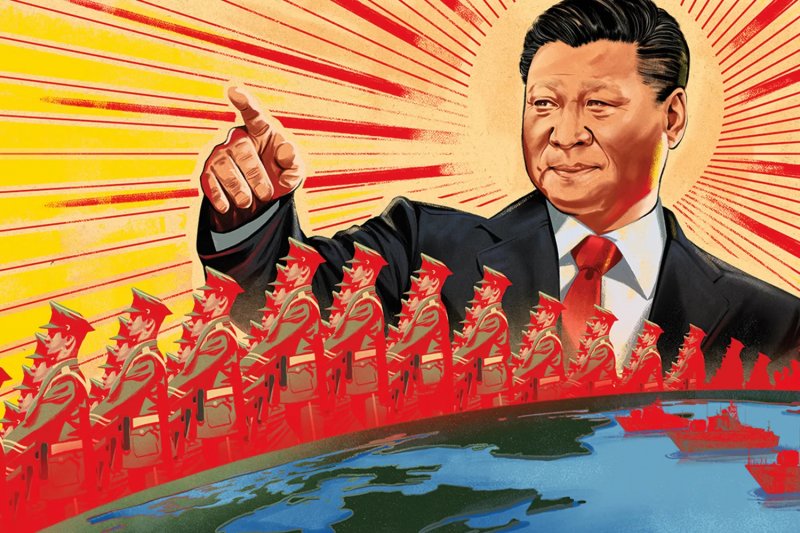
China’s foreign policy and expanding global influence have become defining features of international relations in the twenty-first century.
Once primarily focused on domestic development and regional stability, Beijing today plays an active and often decisive role across multiple continents. Its diplomatic initiatives, economic outreach, and strategic positioning affect governments, markets, and ordinary citizens far beyond its borders. Understanding China’s foreign policy is therefore essential to understanding how the global order is evolving and what this transformation means for the world at large.
Foundations of China’s foreign policy
China’s modern foreign policy is rooted in a combination of historical experience, ideological principles, and pragmatic interests. The country’s leadership frequently emphasizes sovereignty, non-interference, and respect for territorial integrity, principles shaped by China’s own history of foreign intervention and internal upheaval.
At the same time, China pursues what it describes as a policy of peaceful development. Official rhetoric stresses cooperation, mutual benefit, and win-win outcomes. Beijing argues that its rise does not threaten other countries but instead creates opportunities for shared growth and stability. Critics, however, often question how these principles translate into practice as China’s power expands.
Balancing these narratives is a core challenge of China’s diplomacy. Beijing seeks to protect its national interests while projecting an image of responsibility and restraint on the global stage.
Economic diplomacy and global reach
Economic engagement is the central pillar of China’s foreign policy. As the world’s second-largest economy and a major trading partner for more than 120 countries, China wields significant influence through commerce, investment, and finance.
Trade relationships form the backbone of this influence. Many countries depend on China as an export destination, a source of manufactured goods, or a key link in global supply chains. This interdependence gives Beijing economic leverage, even when it avoids overt political pressure.
Chinese overseas investment has also expanded rapidly. State-owned enterprises and private firms invest in infrastructure, energy, mining, technology, and manufacturing across Asia, Africa, Latin America, and Europe. These investments often address critical development gaps, particularly in transport, power generation, and digital connectivity.
However, concerns about debt sustainability, transparency, and local economic impact have fueled debate about the long-term consequences of China’s economic footprint. For some countries, Chinese capital represents opportunity. For others, it raises fears of dependency.
The Belt and Road Initiative
Launched in 2013, the Belt and Road Initiative has become the most visible symbol of China’s global ambitions. The initiative aims to enhance connectivity through infrastructure, trade corridors, and people-to-people exchanges spanning Asia, Europe, Africa, and beyond.
Through ports, railways, highways, pipelines, and digital networks, China seeks to reshape global trade routes and strengthen economic ties. Participating countries often welcome these projects as catalysts for growth, especially where Western financing is limited or conditional.
At the same time, the Belt and Road Initiative has drawn criticism. Some projects have faced delays, cost overruns, or political backlash. Others have sparked debate about environmental standards, labor practices, and national sovereignty.
Despite these challenges, the initiative remains a cornerstone of China’s foreign policy, reflecting its ambition to play a central role in global development and connectivity.
China’s role in global institutions
China’s influence extends well beyond bilateral relationships. It is an increasingly assertive actor in multilateral institutions such as the United Nations, the World Trade Organization, the International Monetary Fund, and the World Health Organization.
Beijing often presents itself as a defender of multilateralism, particularly in contrast to what it portrays as unilateral actions by Western powers. It supports reforms to global governance structures to reflect the growing weight of emerging economies.
China has also helped establish new institutions, including the Asian Infrastructure Investment Bank and the New Development Bank. These bodies aim to complement existing financial institutions while offering alternative sources of funding for development projects.
Through these platforms, China seeks not only greater influence but also the ability to shape international norms, standards, and rules in areas ranging from finance to technology.
Strategic competition and great power relations
China’s growing global role has brought it into strategic competition with other major powers, most notably the United States. This rivalry shapes much of today’s international environment, affecting trade, technology, security, and diplomacy.
Disputes over tariffs, technology access, and supply chains reflect deeper concerns about economic dominance and national security. Issues such as Taiwan, the South China Sea, and military presence in the Asia-Pacific region add a security dimension to this competition.
China rejects the idea of inevitable confrontation, arguing that rivalry can be managed through dialogue and mutual respect. Nevertheless, tensions between Beijing and Washington influence global alliances, investment decisions, and diplomatic alignments.
Other major actors, including the European Union, Russia, India, and Japan, navigate complex relationships with China that combine cooperation, competition, and caution.
China’s influence in the developing world
China’s engagement with developing countries is one of the most significant aspects of its foreign policy. Across Africa, Latin America, the Middle East, and parts of Asia, China has positioned itself as a partner in development.
This approach often emphasizes infrastructure, trade, and practical cooperation rather than political conditionality. Many governments appreciate China’s willingness to finance projects that Western institutions may deem too risky.
China also invests in soft power, offering scholarships, training programs, medical assistance, and cultural exchanges. Media partnerships and diplomatic outreach reinforce its narrative as a reliable and respectful partner.
However, this influence is not without controversy. Critics argue that some projects benefit Chinese companies more than local communities or that they strengthen authoritarian governments. Public opinion toward China varies widely by region and often depends on local experiences.
Technology, standards, and digital influence
Technology has become a new frontier of China’s global influence. Chinese companies are major players in telecommunications, digital infrastructure, artificial intelligence, and renewable energy.
By exporting technology and participating in setting international standards, China shapes how digital systems operate worldwide. This has strategic implications, as control over technology standards can influence security, data governance, and economic competitiveness.
Debates over 5G networks, data privacy, and cybersecurity highlight the intersection of technology and foreign policy. For many countries, the challenge is balancing access to affordable technology with concerns about security and autonomy.
China frames its technological outreach as a contribution to global innovation and inclusion. Critics view it as a potential tool for strategic leverage.
Diplomacy, mediation, and global image
In recent years, China has sought to present itself as a diplomatic mediator and a stabilizing force. It has increased its involvement in peacekeeping missions and occasionally facilitated dialogue between rival states.
Such efforts support China’s broader goal of being seen as a responsible global actor. They also enhance its diplomatic standing, particularly among countries seeking alternatives to traditional power brokers.
China’s global image, however, remains contested. Perceptions differ sharply depending on political orientation, media narratives, and national interests. While some see China as a driver of development and stability, others view its rise with suspicion.
Managing this perception gap is an ongoing challenge for Chinese diplomacy.
Implications for ordinary citizens worldwide
China’s foreign policy is not an abstract geopolitical exercise. Its effects are felt by ordinary citizens across the globe. Infrastructure projects influence local employment and mobility. Trade relationships affect prices, jobs, and consumer choice. Technology partnerships shape access to digital services.
In some cases, China’s engagement brings tangible improvements in living standards. In others, it raises concerns about labor conditions, environmental impact, or economic dependency.
For citizens within China, foreign policy also matters. Access to global markets supports economic growth, while international tensions can affect employment, prices, and personal freedoms.
The future of China’s global influence
China’s foreign policy continues to evolve in response to internal priorities and external pressures. Slower economic growth, demographic challenges, and environmental concerns shape its strategic calculations. At the same time, global instability creates both risks and opportunities.
Whether China’s influence contributes to greater cooperation or deeper fragmentation will depend on how it balances ambition with responsibility. Engagement with existing institutions, respect for local contexts, and transparency in overseas activities will be critical factors.
For the international community, the challenge lies in adapting to a world where China is a central actor. Cooperation, competition, and dialogue will coexist, requiring careful management to avoid escalation and misunderstanding.
Why China’s foreign policy matters
China’s foreign policy and global influence are reshaping international relations in lasting ways. From trade and infrastructure to technology and diplomacy, Beijing’s actions affect how the world functions.
For ordinary citizens, understanding China’s role is essential for making sense of economic trends, political debates, and global challenges. As China’s engagement deepens, its impact on daily life, national choices, and the future of global cooperation will only grow.
In a rapidly changing world, China’s foreign policy is no longer a distant subject for specialists. It is a central element of the global story that shapes opportunities, risks, and the shared future of nations and people alike.

